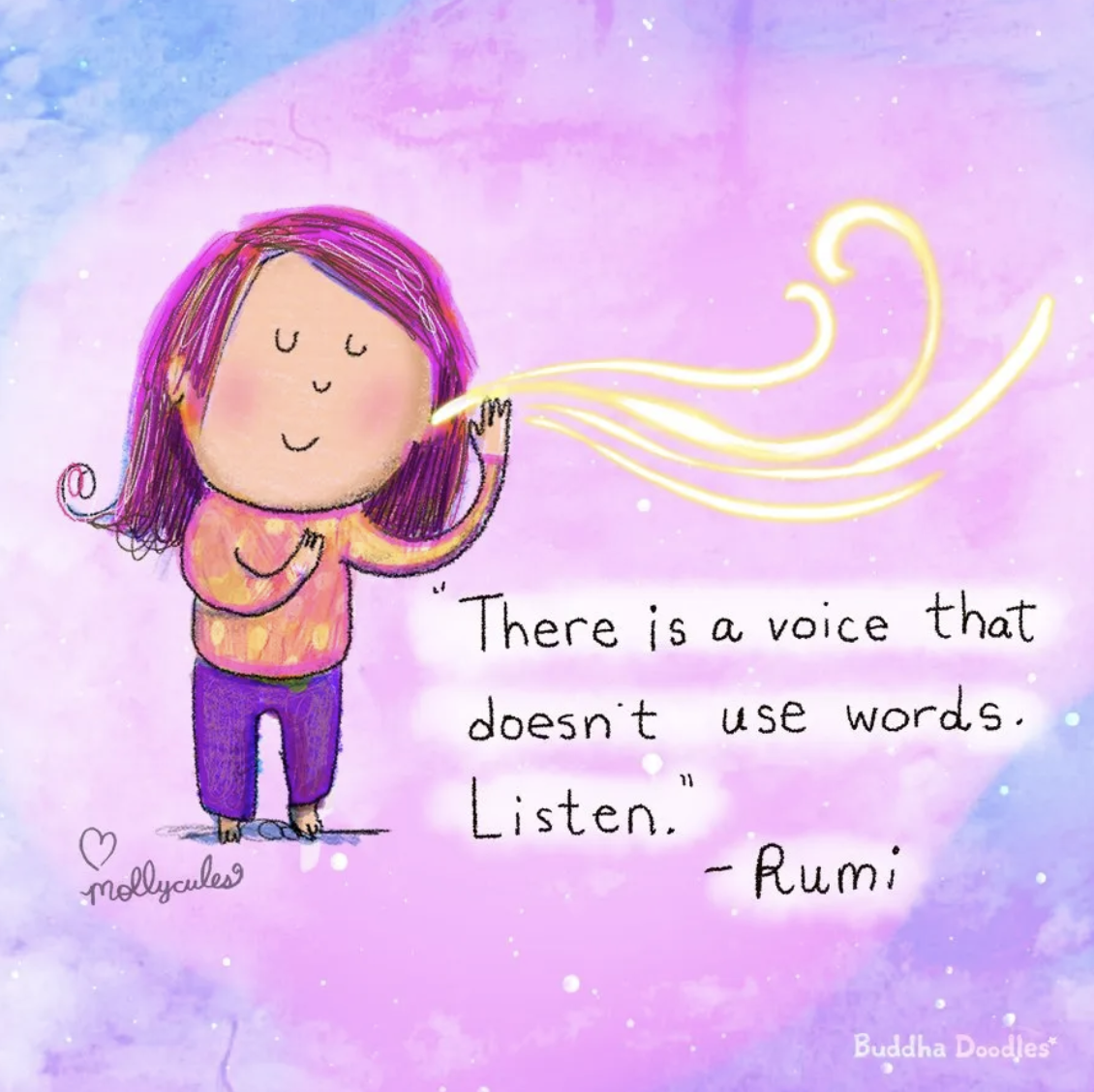
In Zen, a 'turning word' is a phrase from an awakened teacher to help prompt awakening in a student, already on the verge of awakening. Everything hinges on our readiness to hear or see what's 'hidden in plain sight.' And then, we may, at least briefly, pass through the 'diaphanous veil' or 'gateless gate' between heaven and earth.
“And I have felt apresencethat disturbs me with the joy of elevated thoughts; a sense sublime of something far more deeply interfused, whose dwelling is the light of setting suns, and the round ocean and the living air, and the blue sky, and in the mind of man; a motion and a spiritthat impels all thinking things, all objects of thought, and rolls through all things." William Wordsworth, 'Lines Composed a Few Miles above Tintern Abbey'
Below are the closing paragraphs of Thomas Merton's book ‘New Seeds of Contemplation,’ which James Finley considers worthy of repeatedly quoting. In it, Merton lists several turning moments, if you will, 'ordinary miracles' we all encounter from time to time. (NOTE Merton referred to God exclusively as ‘He’ because in the 50s & 60s they didn't know better.) “What is serious to us is often very trivial in the sight of God. What in God might appear to us as ‘play’ is perhaps what He Himself takes most seriously. At any rate the Lord plays and diverts Himself in the garden of His creation, and if we could let go of our own obsession with what we think is the meaning of it all, we might be able to hear His call and follow Him in His mysterious, cosmic dance. We do not have to go very far to catch echoes of that game, and of that dancing. When we are alone on a starlit night; when by chance we see the migrating birds in autumn descending on a grove of junipers to rest and eat; when we see children in a moment when they are really children; when we know love in our own hearts; or when, like the Japanese poet Basho we hear an old frog land in a quiet pond with a solitary splash – at such times the awakening, the turning inside out of all values, the ’newness,’ the emptiness and the purity of vision that make themselves evident, provide a glimpse of the cosmic dance. For the world and time are the dance of the Lord in emptiness. The silence of the spheres is the music of a wedding feast. The more we persist in misunderstanding the phenomena of life, the more we analyze them out into strange finalities and complex purposes of our own, the more we involve ourselves in sadness, absurdity and despair. But it does not matter much, because no despair of ours can alter the reality of things, or stain the joy of the cosmic dance which is always there. Indeed, we are in the midst of it, and it is in the midst of us, for it beats in our very blood, whether we want it to or not. Yet the fact remains that we are invited to forget ourselves on purpose, cast our awful solemnity to the winds and join in the general dance.” Thomas Merton. “New Seeds of Contemplation” New Directions, 1961. James Finley's commentary on the above: “The passage invites us to see how life is such that, from time to time, an extraordinary thing happens. We’re going along ruminating over this and that, when in something as simple as turning to see a flock of birds descending, or in something as simple as watching children at play, where something as intimate as knowing love in our own hearts, we’re interiorly quickened, we’re interiorly awakened to a deep visceral realization that this is holy, that this is real, that this is precious, that this is the way that every moment, deep down really is. These are moments that disclose to us the inherent holiness of life itself, the already perfectly holy nature of the present moment, just the way it is. It seems then to me, that by taking these moments and reflecting on them deeply, they can provide for us a way of beginning to understand what it means to live a contemplative way of life in the midst of today’s world. What it would be like, if we could only learn to walk around this aware all the time, of what our life always is. That is, what would it mean to walk into a room, and instantly become aware of the inherent holiness of everything that’s there, and to interiorly reverence it, and to honor it, and to be faithful to it?” James Finley, “Thomas Merton's Path to the Palace of Nowhere. The Essential Guide to the Contemplative Teachings of Thomas Merton.” Sounds True, 2014. (9h 34m Audiobook - also available from the Halifax Public library via the free app Hoopla) EXCELLENT
“Pay attention to the world around you, to the leaves and the flowers, to the birds and the rain. If you can stop and look deeply, you will recognize your beloved manifesting again and again in many forms.” Thich Nhat Hanh “When we trust with our open heart, whatever occurs, at that very moment that it occurs, can be perceived as fresh & unstained by the clouds of hope & fear.” Dr. Jeremy Hayward
"The Three Sisters" Ballachulish - Glencoe - Scotland
Discernment is in short supply these days - leaving too many of us drowning in negativity, cynicism, meaninglessness, anxiety & depression, externalizing our unresolved, unprocessed inner conflicts onto other people, living creatures and the Cosmos.
"Despair is
only for those
who see the end beyond doubt.
We do not."
J.R.R.
Tolkien
A radically different, infinitely healthier, wiser perspective is that of the mysticsas well as an increasing number of intelligent ANDwise scholars like Jeremy Lent ("The Web of Meaning" 2022), Iain McGilchrist ("The Matter with Things" 2021),etc who masterfully integrate science and traditional wisdomto help us feel at home in our Universe.
Awonderful living example of a highly-evolved mysticis James Finley, author of the exceptional biography, “The Healing Path. A Memoir and an Invitation” 2023 - which I highly recommend! An excerpt from an excellent recent James Finley interview: "A Momentary Mystic" https://www.youtube.com/watch?v=DEQtvkwu2jA :
"One of the Holy Cross brothers, teaching at the high school I went to, talked about monasteries in religion class. He spoke of monasteries as places where people go to seek and to find and give themselves to God, who’s fully poured out and given to us in each passing moment of our life. And they believe that their hidden life of fidelity to that search touches the whole world in ways we don’t understand.
Thomas Merton in ‘The Sign of Jonas’ on the very first page wrote, ‘As for me, I have but one desire, the desire for solitude, to disappear into the secret ofGod’s face.’ At age 14, I didn’t know what it meant, but something in me said, ‘Me too.’ That is the depth from which he spoke of his own longing for God, awakened that depth in me. And for the next four years, I read that book over and over. And later, I lived in the cloistered monastery for almost six years - it had a profound effect on me. And then Merton, as a novice master, guided me in the search. And he led me into the classical texts of the mystics – St. John of the Cross, St. Teresa of Avila, Meister Ekhart, Julian of Norwich, etc. I was so radicalizedby this sense of communion, this deepexperience of incarnate Infinityintimately realized, like the divinity of standing up & sitting down, and how reflective prayer becomes words of wordless silence and oneness, and so on. And Merton once said in one of his talks to the novices, that monastic life is carefully crafted to nurture and protect thatoneness. But there are people in the world who are being led to it and they don’t understand what’s happening to them, and have no one to guide them. So when I left the monastery, I found that that was true. I still wanted to live that way - my meditation practice and the mystics … So I started giving meditation retreats.
I had a chance to study medieval philosophy under Daniel Walsh, who taught philosophy at Columbia, and was influential in Merton’s coming to the monastery. I was very affected by the philosophical theology of the Middle Ages. So when I was writing ‘Merton’s Palace of Nowhere’ on the true self, I said I don’t know how to communicate this to people out here, that we subsist in God like light subsists in flames – the Oneness. And Walsh wrote back. He said you can’t communicate it. Butit will communicate itself through you if you’re convinced in what you say. And he said, if you are what you say. And you know it will communicate itself because there’ll be a response in the listener that knows, something very deep inside of them that mattersvery much is being awakened.
I think that’s what I do. I try to speak from my heart about thisoneness. I try to help people look for little moments where they had a glimpse of it, in the midst of nature, in the arms of the beloved, or reading a child a good night story, or lying in the dark listening to your breathing - how it washes over you like a taste of it, and how in that taste, you get the intuition that in these awakening moments, not that something more was given, but like a curtain opened and that you tasted momentarily theabyss-likedivinenatureof every moment of your life. And so then ... What’s the way of life in which I can be liberated from what hinders me, fromhabitually abiding in the divinityof theimmediacy ofmylife? And I get the feeling that people come to the retreat when they hear that it’s in silence and about the mystics, that they’re in some way been touched by that. Like how do I deepen that? Or how do I be faithful to that?How do I understand it?How do I live by it? For me where it started was because of the (childhood) trauma that was going on, a lot of the arguments with my father was about Catholicism (but) they fought about all kinds of things. So (my mother) would take us (6 children, I was the oldest) to mass on Sunday. And she would ask us to pray to God to give us the strength to get through the things that happen when daddy gets mad. And so I was lying in my bed at night – I was maybe 4 – and I could hear my father screaming at my mother outside the door. And maybe earlier that day he had hit me. I knew tomorrow he wanted to do it again. And so I took my mother’s word and I prayed to God to give me the strength. I was lying there in the dark, and the experience I had was that God heard my prayer, came to me in the dark and in a moment I can’t remember merged with me. So when I woke up the next morning, the trauma still went on. But when I came out into the living room, it was different, because if my father hit me, he thought he was hitting me, but he didn’t know he was hitting that other me, that other people could see. My father didn’t know that the real me was secretly carried by God into a secret place (my father) didn’t know about.
Later, when I became a psychologist, I learned that I was dissociating, that I had borrowed the religious imagery of my mother to give meaning to dissociating. But thatdoesn’t meanthatGod didn’t merge with me in the dark. And so I had a lot of moments like that. I had a lot of these unitive moments. So when I read Merton, I saw monasteries as places where you can actually go and live all the time, because I was like a flame flickering in the wind, it was very much in the heart of me. But I thought the monasteries were built so people can surrender themselves over to that. If we think of the word trauma, the root of the word means a wound or a source of suffering. So we might say that all of us are subject to traumas great & small that can and sometimes do occur in our life together. Small traumas are the slights and the insults, the abandonments, the accidents, the hurts. But the point is, the center holds. Big trauma gets so intense you kind of disappear into the trauma – kind of a psychic death really. If you survive the incest or the beating, whatever, you’re so glad you survived, but not quite, because it got inside of you. And then a triggering event is anything in the present that resembles the original trauma, your autonomic nervous system, you’ll re-experience the trauma – post-traumatic stress disorder (PTSD). And so then as a clinician, that needs to be dealt with in its own right. That’s the therapy.
Sometimes we get this feeling that we’reskimming over the surface of the depths of our own life, andour own woundedness is carrying us along, as part of that. And we realize somewhere that we’re suffering from depthdeprivation. Andwe know of depth deprivationbecausewe can single out certain moments when we tasted depth: in the midst of nature, in the middle of the dark, or in the arms of the beloved, telling a child a good night story, a pause between two lines of a poem that shimmered & shined. So you know it’s there.
So then the question is, what are the ways where that depth dimension starts shining out of the therapy itself? Let’s say you call me for therapy, and I really don’t know what you want to talk about other than the little bit you told me on the phone. But I’ve done it so much, I already know what’s going to have to happen between us, if the healing you’re looking for is going to occur. And here’s what happens. It’s like a liturgy or a ritual. We’ll both sit down. You’ll talk and I’ll listen. At a certain point, I’ll ask you a question and it’s a real question. I want to understand you better. And the question is such that you can’t respond without pausing for a moment to listen to yourself. And in that moment, you’re becoming more present to yourself in my presence. And it’s already started. You don’t say it. You’re not ready yet, but it’s already begun. So little by little, this way of growth forms an alliance. And in that trusting alliance, the person goes through their work. So one of my theses is that, when we risk sharingwhat hurts the most, in the presence of someone who will not invade us or abandon us, we can be re-parented in love. Sometimes you get the feelingyou’re in the presence of someone who is more present to you than you are. And they see a value in you you’re not yet able to see. And you have faith in their faith in you. And little by little by little, it arcs over and becomes internalized and so on.
But there’s another level to this. In that process, there is the opening up of what Jesus called ‘the pearl of great price.’ And what opens up within the person is a depth of presence that’s abyss-like. They might start laughing or they might tear-up. It’s deeper than simply freedom from symptoms. And so sometimes at the end of therapy, people are grateful that they have less anxiety with panic or self-cutting, whatever it is. But often they’ll say something like this: ‘Something was given to me and I’m so grateful for it. I matter. I didn’t know that I mattered. I have a value that cannot be calculated. There’s a preciousness about me that came shining out through my woundedness, and no one can take that away from me.’ And that’s the spiritual dimension. I think that starts to put words to that dimension.
'Sometimes, when having to endure the worst, yetfinding God in the darkest place, you are liberated from the tyranny of shame over your heart. Whereanguishandecstasyintersect, it becomes incandescent— it becomes oneness.' James Finley
Being a therapist was a good fit for me. I felt so grateful for it - to experience the unrelenting courage of the human spirit. Sometimes people would say something to me like, ‘I feel so safe in here.’ I’d say, but notice I’m not doing anything to you. And I think what it is, when you’re in my presence, you’re more present to yourself. And if you can be more present to yourself in my presence, you can literally be more present to yourself (also) when you’re not in my presence. And you keep sifting it out and sifting it out. I felt so honored by that process." “A mystical experience is experiencingGod’spresence in your life.” James Finley
"The question is, ‘what does that mean?’ I’ll give some examples from Thomas Merton and all the mystics. This is from the last chapter of Merton’s ‘New Seeds of Contemplation’: ‘The world and time are the dance of theLordin emptiness. The silence of the spheres is the music of a wedding feast.’ So there he’s bearing witness to the already perfectly holy nature of what is – this dance. And then Merton said a stunning thing. He said, ‘We don’t need to go very far to catch echoes of that game and of that dancing.’ And he gives very simple examples. He said, ‘You’re out walking alone in the midst of nature, and you turn to see a flock of birds descending, and as if out of the corner of your eye, you catch something in their descent that’s primordial, vast and true.’ And then, to use faith language, although the person might not explicitly say it in faith language, you know that the presence of God is the infinity of their descent. And their descent is the incarnate immediacy of God. ((Self realizing that it's looking in the mirror)) And God is the infinity of your awareness of their descent. And your awareness of their descent is the concrete immediacy of God. And that’s the experience of God.’ ((Perhaps it's just a matter of remembering - remembering our True Nature, our Self,our ‘Original Face before our grandparents were born’ as we co-create the Cosmos))
Another one is, there are moments between two people, in moments of loving union with each other, when they sense something within their love that’s beyond what words can say. It is a boundaryless quality. And in faith, you say, ‘God’s the infinity.' The infinite love of God is the infinity of their love. And the infinity of their love is incarnate in the midst of God. You’re reading a child a good night story. You sense that in the presence of the childyou’re in the presence ofGod. That’s why they’re so disarming. And then what I’m saying also then, inlove lost, as painful as it is, if you just sit with it very quietly, you can sense something of God’s sustaining presence guiding you throughthe loss. And when you come out the other side, you’re grateful to get your balance back, but you know, it’s so important to never forget what was learned in the dark – about fragility, the delicacy of life, grace." James Finley interview: "A Momentary Mystic" https://www.youtube.com/watch?v=DEQtvkwu2jA :
"Although we all have a fundamentally pure nature, it is not easy to get in touch with it. The gross way our mind ordinarily functionsdrowns out this deeper, more subtle vibrationto such an extent that we generally remain unaware of its existence. If we truly want to connect with this subtle essence, we need to quietall distractions and loosen the hold our ordinary appearances & conceptions have on us. In other words, we need to create space, space in which our essentially pure naturecan function uninterruptedly. Then. . . we will be bringing to the surface the inner, divine qualities that have always existedwithin the depths of our being.” Lama Thubten Yeshe
“Self is everywhere, shining forth from all beings, vaster than the vast, subtler than the most subtle, unreachable, yet nearer than breath, than heartbeat. Eye cannot see it, ear cannot hear it nor tongue utter it; only in deep absorption can the mind, grown pure & silent merge withformless truth. As soon as you find it, you are free; you have found yourself; you have solved the great riddle; your heart forever is at peace. Whole, you enter the Whole. Your personal self returns to its radiant, intimate, deathless source.” Mundaka Upanishad
"To have the radiant calm and unswayed balance of mind that we call equanimity is to be like the earth. This is to be at home in our own lives. We see that this universe is much too big to hold onto, but it is the perfect size for letting go." Sharon Salzberg
"The clouds are thin, the wind is light, the sun is nearly overhead. Past the flowers, through the willows, down along the stream. People don't see the joy in my heart. They think I'm wasting time or acting like a child." Cheng Hong, Chinese poet
"There are those who are trying to set fire to the world. We are in danger. There is time only to work slowly, There is no time not to love." Deena Metzger
James Finley is a wise 'finger pointing at the moon.' https://www.kanshoji.org/en/kusen-en-2/the-finger-pointing-at-the-moon/ He's a mystic whose primary path happens to be Christian, AND is deeply influenced by Buddhism, AND deeply respects Hindu, Taoist, Aboriginal, Jewish, Sufi and other mystics.
“When you consider all the saints and prophets as legitimate and no longer differentiate between religions, you have arrived at the stage of truth.” Ostad Elahi (1895-1974)
“It seems to me that this transformative process continues on throughout our lives. For as long as we are on this earth,we are children of the light finding our way through darkness. The task, it seems to me, is for us to continue to pass beyond immature understanding of spiritual matters formed in times of innocence and in times of trauma and abandonment by learning to cultivate more mature, reality-based ways of understanding the deep healing that spirituality brings into our lives. At the same time, we must be careful not to allow our adult, conceptual comprehension of such things to close off the childlike opening of wonder through which the graces and gifts of God flow into our lives. We must always keep in mind, as Gabriel Marcel phrased it, that ‘we do not see the light; rather, we are the aperture through which it shines.’” James Finley. “The Healing Path. A Memoir and an Invitation.” Orbis, 2023.HIGHLY RECOMMENDED!
Tastes of 'mysticism' ... “Let’s say that you’ve been fortunate to be in a deep marital love relationship, that has been for you so transformative and so profound and so life-changing that you feel immense gratitude. You get a phone call from someone you knew in high school but haven’t seen in years, and they say they’re passing through town and wants to catch up with you. You’re glad, because you were friends in high school, so it would be interesting. And you’re talking & sharing about your work and what’s happened, and so on. And you tell this person about your spouse – about how you met, about the person’s character, you show photographs of what the person looks like, and your friend says, ‘Yes, I know, but what I’d like to know is this, who is it that you know the person to be, not factually, but in your love for this person?’ And all of a sudden you realize that nothing you could say would do justice to who you know the person to be in love, and your heart breaks when you try. And your grace would be strangely made whole by having your heart broken by this love that can’t be expressed adequately in words. That’s mysticism. It’s like the unexpected nearness of the upwelling of a gift that cannot be explained. It washes over you and it touches you."
“You know you have loved someone when you have glimpsed in them that which is too beautiful to die.” Gabriel Marcel
"Thomas Merton at the end of ‘New Seeds of Contemplation’ gives a litany of examples of this. He says in the midst of nature imagine you’re out walking and you turn to see a flock of birds descending. And he says, as if out of the corner of your eye, you catch in their descent something primordial, vast & true, and you’re interiorly quickened in a kind of subtle enrichment of awareness – a sensing that in some way you can’t explain, God’s the Infinity of the intimate immediacy of the birds in their decent. And the birds in their descent is the concrete immediacy of God. And the concrete immediacy of God is in you being awakened to that. And your mood is to just sit down and sit there for a while – ‘Like what in the hell was that?’ I can’t say it, but having tasted it, I will not break faith with my awakened heart. I will not play the cynic. In an unexpected hour I was quickened with this oneness. He says, sometimes it can happen also in the presence of a child, reading a child a good-night story, and you’re just literally unraveled by the presence of this child. Or we’re sitting in the presence of a dying loved one – like the mystery of it all. We’re lying awake at night listening to the rain pour down all about the house and a sense comes over you like this.
So I think we all have moments like this, but we don’t live in a society that teaches us to become students of these moments. Because what starts to happen for some people with these touches that happen every so often - there’s the desire to abide in the depths of the leadingly glimpsed. That is, having tasted the Oneness, and it has about it the feeling of that which never ends.
What would be a path or a way of life, where could I find someone well-seasoned in such things that could guide me? And this is the guidance of the mystic, turning to the mystics for guidance. They offer practical guidance. First of all, how to discern that it’s happening to you? Because sometimes it’s so subtle, you don’t calibrate your heart to a fine enough scale to pick that up, and then how can you cooperate with it? How can you go along with being transformed by God into God unexplainably forever in the ordinariness of your life? That’s the feeling that it has for me.
In the momentum of the day’s demands, just the complexities of life, most of the things we notice, we notice in passing on the way to something else. Then you get the feeling that you’re skimming over the surface of the depths of your own life. And what’s regrettable is that God’s unexplainable Oneness with you is hidden in the depths over which you’re skimming. But in moments like this, like a hiatus in sequential time, you’re born again, like you’re quickened like this. And then being quickened, This is what the root world religion means – religio – a religio is a ligature to be rebound to the origin. We need to be rebound because we’ve been exiled from it. So how can I be rebound to this upwelling of this flowing out of this Divine generosity which alone is ultimately real? And how can I be more habitually sensitive to it and responsive to it so I can live it every day and share it with others by the way I treat them, listen to them, and walk the earth?" James Finley (1hr 28mins) interview – EXCEPTIONAL: https://www.youtube.com/watch?v=ymSfaKy4CPI
“Don’t prioritise your looks my friend, as they won’t last the journey. Your sense of humour though, will only get better with age. Your intuition will grow and expand like a majestic cloak of wisdom. Your ability to choose your battles, will be fine-tuned to perfection. Your capacity for stillness, for living in the moment, will blossom. Your desire to live each and every moment will transcend all other wants. Your instinct for knowing what (and who) is worth your time, will grow and flourish like ivy on a castle wall. Don’t prioritise your looks my friend, they will change forevermore, that pursuit is one of much sadness and disappointment. Prioritise the uniqueness that make you you, and the invisible magnet that draws in other like-minded souls to dance in your orbit. These are the things which will only get better." Judi Dench
"The Buddha
taught that all phenomena, including thoughts, emotions, &
experiences, are marked by three characteristics: impermanence (anicca), suffering or dissatisfaction (dukkha), and not-self (anatta). These three marks apply toall conditioned things—that is, everythingexcept for nirvana. According to the Buddha, fully understanding & appreciating the three
marks of existence is essential to realizing enlightenment. Everything changes, the Buddha
taught. This may seem obvious, but much of the time we relate to things
as if their existence were permanent. So when we lose things we think we
can’t live without or receive bad news we think will ruin our lives, we
experience a great deal of stress. Nothing is permanent, including our
lives. Dukkha, suffering or dissatisfaction,
is among the most misunderstood ideas in Buddhism. Life is dukkha, the
Buddha said, but he didn’t mean that it is all unhappiness &
disappointment. Rather, he meant that ultimately it cannot satisfy. Even
when things do satisfy ― a pleasant time with friends, a wonderful meal, a
new car ― the satisfaction doesn’t last because all things are
impermanent. Anatta—not-self, non-essentiality, or
egolessness—is even more difficult to grasp. The Buddha taught that
there is no unchanging, permanently existing self that inhabits our
bodies. In other words, we do not have a fixed, absolute identity. The
experience of “I” continuing through life as a separate, singular being
is an illusion, he said. What we call the “self” is a construct of
physical, mental, & sensory processes that are interdependent &
constantly in flux. It is the illusion of a separate,
permanent self that chains us to suffering & dissatisfaction, the
Buddha said. We put most of our energy into protecting the self, trying
to gratify it & clinging to impermanent things we think will enhance
it. But belief in a separate, permanent self leads to the craving that,
according to the four noble truths, is the source of our suffering. The Buddha’s teachings, especially the practice of the eightfold path,
provide the medicine to cure our illusions, so that we become less
self-centered & less attached to impermanent things. As we investigate
the truth of the three marks of existence, we develop factors of
enlightenment such as equanimity—the ability not to be jerked around by
our likes & dislikes — and serenity." https://tricycle.org/beginners/buddhism/the-buddhas-three-marks-of-existence/
Nirvana (above) - which alone is NOT characterized by impermanence, unsatisfactoriness & not-self - is the awakened state or enlightenment. The Buddha was a human being who around 500BCE felt the urgent need to end his own & humanity's existential suffering, found the cure for it, and over a 50-year period, taught thousands of others to reach his level of awakening from suffering. His teachings are universal - for everyone, so there are even Catholic nuns & Jewish Rabbis who at the same time are highly accomplished practitioners of Buddhism, especially Zen. Below are glimpses of awakening - experiences of a higher dimension than conditioned phenomena, our usual frame of reference, so words are inadequate:
"To be enlightened is to be intimate with all things." Zen Master Dogen
"Then it was as if
I suddenly saw the secret beauty of their hearts, the depths of their hearts where
neither sin nor desire nor self-knowledge can reach, the core of their reality, the
person that each one is in God’s eyes.
If only they could all
see themselves as they really are.
If only we could see
each other that way all the time.
There would be no more
war, no more hatred, no more cruelty,
no more greed… I suppose
the big problem would be that
we would fall down and
worship each other....
There is no way of
telling people that they are
all walking around
shining like the sun...." Thomas Merton
"If we could really, really, really see right now, all that we really, really, really are, we’d see the infinite mystery of God pouring itself out and giving itself away as the intimate immediacy of all that we really are. That vivid state, in the fullness of that state, would be the unitive mystical experience. And then we can learn to be habituated in that state and translate it into love for other people." Jim Finley Interview https://batgap.com/james-finley/
“We are here to find that dimension within ourselves that is deeper than thought.” Eckhart Tolle
“Carl Jung said, ‘How can we claim the years have taught us anything, if we’ve not learned to sit & listen to the secret that whispers in the brooks?’
So if I look at a fire, for example, with ego-consciousness, I see a fire. But if I gaze into the flames, in that contemplative gazing at the flames, I sense in the flames the intimations of the holiness and the mystery manifesting itself as this flame.
That’s why I think when we try to talk about it, we’re trying to grab it in words. But if we sit in meditative silence infused with love, the state of wonder, we intimately taste directly for ourselves for which no words can be found. That’s why we long for the experience to which our words are aluding to, and how to stabilize in it, and how to share it with people.”Jim Finley EXCEPTIONAL Interview https://batgap.com/james-finley/
“You know you have loved someone when you have glimpsed in them that which is too beautiful to die.” Gabriel Marcel
I'm sure I'm not alone wanting a wise, big-picture overview of life, so I canlive my best life. Mystics of all wisdom traditions, passed & living, are connected to & sharethis wisdom.
One of the wisest quotes I've come across: "The most important question to ask ourselves, according to Einstein: 'Is the universea friendly placeor not?' ... If we believe that the universe is unfriendly ... peace will be elusive at best." Joan Borysenko. “Fire in the Soul. A New Psychology of Spiritual Optimism.” Warner Books, 1993.
Even intelligent, educated people seem overwhelmed bymysticism for many reasons. First and foremost, our culture is by and large ignorant about mystics&mysticism. Our "consumer society" trains us to buy as much as possible as fast as possible, "greed is good," even after 9/11 George W. told Americans to show the world what they're made of, "Go shopping!" We're starving on a restricted diet of junk food (shallow materialistic concerns), and don't even know the vocabulary of nutrition (metaphysics, spirituality). We fear what we don't know, and procrastinate & otherwise avoid learning about it.
"Nothing in life is to be feared,
it is only to be understood. Now is the time to understand more, so that
we may fearless." Marie Curie, Nobel Prizes in Physics, & Chemistry
"... relax, allow life to be as it is, &open yourheart to yourself. It’s
easier than you might think, and it could change your life.” KristinNeff. “Self-Compassion. The Proven Power of Being Kind to Yourself.” HarperCollins, 2011.
"I was born when all I once feared I could love.”Rabia Basri
"Once we are willing
to be directly intimate with our life as it arises, joy emerges out of
the simplest of life experiences."Roshi Pat Enkyo O'Hara
During meditation “you are not escaping the world; you are getting ready to fully embrace it.” Christine Skarda
"To be enlightened is to be intimate with all things."Zen Master Dogen
SO, what CAN we do?Not should, not must - although our time as individual mortal beings, as well as a species is running out - but absolutely CAN do, because wisdom that is IN ALL of US, the wisdom that is in fact who/what we actually are, is amazingly what we mostly, and in some almost entirely, have forgotten. Here's some of what I've understood from the many imho wise elders I've been reading about, listening to on the web, occasionally meeting, and more recently, blogging about:
Don't Judge. Every day we see outrageous, disgusting behavior on the news. It's disorienting to see how almost half of the US population fervently supports behavior, that in a few years (as Germans did after WWII) they will categorically deny having even known anything about it. So it's hard not tojudge terrible behavior. Butfrom a much higher, non-dual perspective,what if we're each born to play a certain role, with a certain set of talents, a certain set of limitations & no matter how wonderful or horrible it appeared, we all did our best. And what if most of our ridiculous behavior was because most (but mercifully not all) of us completely forgot that we took on our role freely, including the fact that we are actually producers & executive directors of the entire play - almost identical to the Jesus being fully human andfully Divine story, except the he had almost complete recall of who he actually was, where he came from, and where he would return to. Bewildered? This blog & its video might help: http://www.johnlovas.com/2023/01/the-nearly-unforgivables.html
Be Discerning. Many of us spend a great deal of time watching / listening to the news & comments about the news. While it's important to perhaps watch / listen to the CBC or BBC news for 30 minutes a day, much more than that is probably masochistic or even an addiction. Doing more & more of what makes you feel sick is not a recipe for optimal healthy. Instead of a steady diet of psychopathic politicians, billionaires, "influencers", and other nightmare visions, for the sake of sanity - how about reading about and listening to wise elders? My blogs are all about inspiring, mature, healthy, wise role models, like:
and MANY MORE wise elders to learn from & be inspired by.
It'sOUR CHOICE - our free will - whether we immerse ourselves inwisdom - OR - indarkness. "Too busy", yet doomscrolling for hours each day?; is this wisdom stuff "too deep" or "too confusing", and again, "just too busy" to get into it and learn? You can procrastinate and aim at bestfor feeling superficially OK, "ordinary unhappiness" - OR - discover what life isreallyabout.
Learn & Do Spiritual Practices. Theory is important BUT not enough. We need to intentionally PRACTICE shiftingfrom beingfearful consumer robotstobecoming wise elder human beings. Our culture is not big on "practices." Some of us might admire the dedication it takes to become world class athletes, dancers, surgeons etc, but most of us just don't have the dedication to put in the time & effort. The ONE area where ALL of us would massively benefit is putting in dedicated time & effort into spiritual practice: http://www.johnlovas.com/search?q=spiritual+practice
Be a Nurturing Presence. Only by waking up to who/what we truly are, can we help instead of hinder others to wake up and help others. “… we have to allow our higher nature to show before we can do anything real, before we can be truly responsible people.” Jiyu-Kennett. “The Wild, White Goose. The Diary of a Female Zen Priest.” ed 2. Shasta Abbey Press. 2002.
Be Humble. The ego is a tricky, sticky, persistent trickster. We must regularly check our own BS-meter. A common problem is assuming a massive group ego - thinking one can do even horrible things because "I'm doing God's work." But such "crazy wisdom" is just crazy. To paraphrase Forest Gump, "Crazy is as crazy does." Humility, gentleness, empathy, wisdom & kindness are rarely promoted or even recognized in our consumer culture & partisan religions.
Learn Self-compassion. The tough, aggressively self-reliant, workaholic individual is venerated these days, while a decent, nurturing, humble person would be branded "a loser" by today's dictators & billionaire CEOs. So decent human beings need to intentionally practice self-compassion, in order to survive & be effective in today's crass, superficial, heartless environment.
Practice Self-awareness. With self-awareness practice, your talk & your walk are kept aligned. Again, humility is crucial. "Self-inquiry" is a specialized, key, self-awareness practice: http://www.johnlovas.com/search?q=Self-inquiry
Become More Discerning, More Self-compassionate. The more neuroses & "story of me" burdens we shed, the more clearly we see ourselves & what's going on around us. The more clearly we see, the more magnified our remaining (though diminishing) neuroses & other burdens appear to us, so it can seem like we're regressing instead of "getting ahead." So we need more self-compassion & patience with ourself. “Felt reality is invariably wept reality, and wept reality is soon compassion and kindness. Decisive and harsh judgmentsslip away in the tracks of tears. And when we cry, we are revealing our truest, most loving self.” Richard Rohr. “The Tears of Things: Prophetic Wisdom for an Age of Outrage” Convergent Books, 2025.
Live in Joy. Gradually, you will be progressively more peaceful & joyful, regardless of the many challenges & sorrows in your own & loved ones' life, as well as that of the human race. The major, even crippling burdenthat you will shed is your identification with & constant rehashing of your own 'story of me' AS WELL AS its twin, the constant anxiety of 'what will happen to me?' and of course, vividly imagining the worst possibilities. As this HEAVY PSYCHOLOGIC BURDENstarts to lift, you start to experience 'the peace that surpasses all understanding' ie it must be experienced to be understood. Even this has, if you will, a 'dark side': while you'll see as your own past, no matter how miserable, as just a story, your empathy towards others (even actors playing a sad role in a movie) becomes progressively more powerful. Your job now is embodyingpeace & joymodelingequanimityeven in the midst of chaos, when it's the most essential.
"This is actually instruction from the Buddha, where he says, ‘Live in joy, in love, even among those who hate. Live in joy, in health,even among the afflicted. Live in joy and peace, even among the troubled. Look within. Be still, freefrom fears and attachments. Know the sweet joy of living in the way things are in the Way, the Dharma.' And so this is also a challenge. He doesn’t say, let’s get rid of disease and all these problems, butto find a joyfulway to be aliveamidst it all.” Jack Kornfield - Finding Your Self on the Spiritual Path - Point of Relation with Thomas Hüblhttps://www.youtube.com/watch?v=4Fjz7WaTyX4WONDERFUL MATURE WISDOM - Jack Kornfield at his best
And some 500 years later, in another incarnation of the Divine, Jesus said, "the poor will always be with us." Fixating on quickly eliminating age-old problems is in itselfproblematic, akin to "seeing a splinter in another's eye," again from Jesus, advising that we should first address our own significant flaws (‘the beam’ in our own eye) before attempting tocorrect / "save"others.
“The teachings on Buddha Nature do not mean that there is some nucleus of Buddhhood enclosed in sentient beings behind the temporary obscuring stains. Rather, our whole existence as sentient beings is in itself the sum of temporary stains that float like cloudsin the infinite, bright sky of Buddha Nature, the luminous, open expanse of our mind that has no limits or boundaries. Once theseclouds dissolve from the warm rays of the sun of wisdom shining in this space, nothing within sentient beings has been freed or developed, but there is just thisradiant expanse without any reference points of cloud-like sentient beings or cloud-free Buddhas." Sthiramati, 6th century Indian Buddhist scholar-monk
Watching David Ditchfield's 40-minute BBC interview about his Near-Death Experience (NDE) is imho wise use of your precious time: https://www.shineonthestory.com/