Showing posts with label constant change. Show all posts

Saturday, October 7, 2023

Ending Suffering Alone

    “We need to be aware of what we are practicing in any moment. Because whatever we practice, we get better at, whether it’s the skillful OR the unskillful.” Christina Feldman

    Sadly most of us (unconsciously) routinely practice avoiding the present moment, opting instead for all manner of distractions, as well as outright dissociation. Something about the present moment gets us to shut down, run away & hide, often alone.
    BUT when
we're suddenly hit with an existential bomb - the diagnosis of a serious disease like Parkinson's; or our world is rattled by serious physical injury eg our body crashing against a bus' windshield; or worse, being overwhelmed by a whole series of serious challenges in rapid succession - we MIGHT actually open up to ourselves, those close to us, & possibly mental-health specialists about what we're going through, and share our experience of shipwreck.
    Such
shared curiosity & examination of life's most challenging & most meaningful moments is precious intimacy - with ourself, others and life itself, and feels refreshingly expansive, wholesome & healing! Very recently, I had the privilege of deeply listening to two old friends share their journey through major current challenges.

    "To be enlightened is to be intimate with all things." Zen Master Dogen 

    “It is the perspective of the sufferer that determines whether a given experience perpetuates suffering or is a vehicle for awakening.” Mark Epstein MD

    “We suffer to the exact degree that we resist having our eyes & hearts opened.” Adyashanti

    Whether we're part of a joyous celebration, OR shoveling a large mound of sand from one spot to another, OR undergoing a searingly painful medical procedure, we're at our BEST when we're fully open to & fully engaged with present moment reality - not judging it in any way, neither trying to hold onto it, nor trying to escape it. This may sound weirdly counterintuitive & counter-cultural, however, the proof is in practicing & experiencing this for yourself.

    Siddhartha Gautama was born over 2,500 years ago, in what is now Nepal, to royal parents. But when he realized that despite his privilege of youth, health, wealth, power & position, he & everyone he loved - like everyone else in the world - are subject to constant change, aging, sickness & death. He was shocked but inspired, leaving all that he had behind (his wife, young child, parents, possessions & kingdom) to search for the cause of suffering and the way to end it. After years of severe asceticism, and meditation, he succeeded, attaining enlightenment, after which he was called the Buddha.

    "The Buddha stated the cause of suffering through his Four Noble Truths:
        
There are suffering & dissatisfaction in the world & in our lives.
        • The cause & origin of that suffering is Craving.
        • The cessation of Craving is the cessation of suffering.
        • The eight-fold path leads us to the end of that suffering.

    This is Buddhism in brief: suffering, the cause of suffering, the end of suffering, and the path leading to the end of suffering.
   
Buddhism is not about rites, rituals, prayers & incense. It is not a religion, but a scientific investigation into overcoming sorrow at all levels of mind & body ... certainly beyond any religious belief system ... as well as beyond anything science currently offers.
    ... the Buddha made it clear that if you follow the directions, awakening can be achieved in a single lifetime, even in as little as a few days. This is as true today as it was at the time of the Buddha."
David C. Johnson. “The Path to Nibbāna. How Mindfulness of Loving-Kindness Progresses through the Tranquil Aware Jhānas to Awakening.” 2017. 

    "The wisdom that the suffering doesn't belong to you will itself get you out of suffering, without you having to do anything." Shri Atmananda

    I stumbled on this insight on my first longish (10-day) silent meditation retreat. My suffering from "meditation pain" felt so massive, that I was certain it couldn't possibly be mine alone, and that I must somehow be helping to process all of humanity's burden of suffering. As soon as I gained that perspective, the suffering disappeared, replaced by blissful ease & joy.
    So
suffering is impersonal - nobody's out to get us, we're not unlucky or cursed, etc. Yet we take many things, especially suffering, VERY personally. Learning to LET GO of the sticky mental habits that cause suffering is considered skillful practice ie a practice that reduces our own & others' unnecessary suffering.
    A
long the same lines, the sense of being a 'self' that's alone & separate from everyone & everything else - a lone wolf, me alone against the world - is an inherently cold, contracted, lonely, fearful. Our natural state is inherently warm, expansive, connected, joyous.
    We
can actually practice residing in our natural state. And when we retract into separate self, we can learn to recognize & release this, and return to our natural state.

    “Suffering is not enough.
     Life is both dreadful and wonderful.
     To practice meditation is to be in touch with both aspects.

     Smiling means that we are ourselves, that we have sovereignty over ourselves, that we are not drowned in forgetfulness.
     How can I smile when I am filled with so much sorrow?
     It is natural— you need to smile to your sorrow because you are more than your sorrow.”
                Thich Nhat Hanh

    "Happiness is your nature. It is not wrong to desire it. What is wrong is seeking it outside when it is inside." Ramana Maharshi


the days pass slowly,
but when you look back,
you realize how quickly the years have flown by

Michael Caine


Friday, July 7, 2023

Suffering, Peace and Meaning

    It's difficult to appreciate the corrosive effect that our society's dreary materialism has on even those of us who consider ourselves religious or spiritual. What is your default mood? When there's nothing specifically pleasant or unpleasant going on in your personal life, how do you feel - bright, gray, or dark? Even if our own life seems to feel OK for the moment, most of us are seriously disturbed by the war in Ukraine and the environmental crisis. But do you feel hopelessly doomed?
    Imagine, after many years of wanting one,
you're finally driving down the highway in your gorgeous expensive sports car, but instead of luxuriating in the smooth, controlled ride & powerful purring of the engine, you're frustrated by the constant weird vibration & annoying repetitive whirring sound from an obvious wheel-alignment problem. You go to get that fixed, and the mechanic finds one problem after another; then the car gets scratched & banged up; the paint job fades; the car is never 'in tune'; it starts rusting; new models make it look strangely out of date; your dream is a chronic disappointment. And this is a 'first world problem' - boo hoo! How about constant change, aging, sickness & death - not just of ourselves, but all our loved ones & our material possessions?
    Over
3,000 years ago, the Buddha left his family & privileged life behind because he felt that he had to discover how to be happy in a world of 'dukkha.' Commonly thought of as suffering, dukkha more accurately refers to a wheel on a cart that's off center - today we might say, 'dis-ease' over the fact that nothing stays even satisfactory, never mind perfect!
    HOW CAN we live the best life possible, in a world that is NOT aligned at all with our individual material hopes & desires?

    Non-duality ('perennial philosophy') is the understanding that underlies all the great religious & spiritual traditions. If we were to distill the essence of that understanding and express it in contemporary terms, it would sound something like this: Peace & happiness are the nature of our being, and we share our being with everyone & everything. The first part of this phrase, ‘peace and happiness are the nature of our being,’ refers to our inner experience – our thoughts and feelings. The second part, ‘we share our being with everyone and everything,’ refers to our exterior experience, that is our relationship with people, animals and things." Rupert Spira "Nonduality, Consciousness, and Ending Suffering" : https://www.youtube.com/watch?v=rtlDY3-rE_Y

    A transcript of, imho, two wise, intelligent people - Rupert Spira (RS) and Bernardo Kastrup (BK) - in conversation:

  
RS: What is it that causes most people to question the materialist paradigm? Suffering. If we didn’t suffer, there would be no reason to question our view of the world, on the contrary, we would think the happiness I experience is a confirmation that my view of the world is correct. We would never question anything and that’s why so many people are first open to the possibility that we are discussing here.
    Through the experience of suffering their life falls apart. They realize something’s not working. And it’s not just today that it’s not working, it gets worse the older you get. As Henry David Thoreau said, ‘Most people lead lives of quiet desperation.’ You get half-way through your life, and you realize it’s not working - relationships, activities. You’ve experienced enough suffering to no longer be able to keep it at bay through objects, substances, activities, relationships
. You’ve been failed by life sufficiently often to probe a little bit deeper – could there be something about my attitude that is responsible? Might I have got something wrong? And for most of us, it’s suffering that opens this door.
    For me it was, although I had this very early intuition, at age seven, that everything is a dream in God’s mind. Then I forgot that intuition as I grew up. It was suffering that re-ignited my interest in these matters. In fact in my case it was a very particular experience, when my first girlfriend, with whom I thought I would get married, have four children and live happily ever after, ended our three-year relationship in a two-minute phone call. And for the first time in my life I became aware of the extent to which I had invested the thing that I loved the most – namely happiness – in objective experience. This cracked my world. My world had already been cracked by my parents’ divorce, but this was a crack that I could no longer plaster over. Am I going to spend the rest of my life investing the thing that I love most in life – which is peace or joy – in something which is inherently unstable? This brought urgency. I was already interested in these matters, but it became a passion. There must be something wrong with my model of reality
.
    What
can I know for certain is true? And if I were to start there and hold onto that, and only lead a life that was consistent with that, what kind of life would that be?”

    How the perennial philosophy / non-dualism has influenced their lives:

    RS: Suffering arises less & less frequently, and it lasts for less & less time. And fewer & fewer experiences have the power to provoke it. Now I would never say that it never happens. I can be triggered in a situation and it can create an emotional resistance in me – that’s what suffering is, emotional resistance. But I notice that fewer experiences have that capacity. They have to be quite intense. So it happens less & less frequently, and when it does happen, when the experience of suffering is triggered, then this understanding kicks in quite quickly, and I’m able to trace my way back to my essential being and its innate peace that lies behind, so to speak, the content of my experience.

    BK: “Rupert radiates peace. … I’m not there. I still have my anxieties. What did happen for me, and I’m extraordinarily grateful for that, because I think that’s what makes all the difference, the banality, the meaninglessness that most people experience as their lives, that is completely gone for me.
    I’m
not in profound peace, I have my demons, my anxieties, I suffer – suffer with things that there’s nothing I can do about, some of them physical in my own body, but I never have that notion that all this suffering is for nothing, that life is meaningless, that everything comes to a total end and it’s all for nothing. That I don’t have.
    My
life is infused with meaning. In particular, the suffering is infused with meaning. Suffering is a great drive. It’s what keeps us moving in the direction of depth. Otherwise life would remain so shallow. We wouldn’t be asking the deep questions."

    
RS: “I think the fruit of this (non-dual) understanding is peace on the inside – absence of suffering on the inside – and love on the outside. And when I say love, I don’t just mean a warm cozy feeling, when I use the word love I mean the recognition that we share our being, our reality, with everyone & everything, in other words, it is the felt sense of the understanding that we are speaking of here. So these two experiences are, I would suggest, the fruit of this understanding – peace on the inside, and love, beauty or oneness on the outside.
    And
I have always felt, with you Bernardo, that you share this understanding profoundly, but that the fruit of it, at least on the inside, has been delayed in your case. Why? Because, as you’ve just said, suffering propels us to go deeper & deeper & deeper. It’s the fuel for this investigation, and I think you have a unique role in the world to share this understanding in a way that nobody else can, and rather than a way, in a field that nobody else can – for instance, in a way that I’m not qualified to speak – in the world of science. And for this reason, I feel that the fruit of this understanding, although I see it in you more & more over the years, but I feel the fruit of this understanding is being withheld from you precisely to keep you motivated to do what you are supposed to be doing in the world. And I think, as time goes on, I see it happening in you already, as time goes on, this peace will gradually emerge in your experience. And it’s absence, I do not in any consider to be a failure of your understanding. I think it’s necessary for you to do what you are doing so beautifully in the world."

    BK: “Of course what Rupert is saying instills hope in me. But … I am at peace with my lack of peace. I don’t double my suffering by not being at peace with the suffering. Because if you’re suffering, and then you tell yourself that I should not be suffering, then you just multiply it by two, you just make it worse. Now I don’t make it worse. I don’t have that voice telling me, ‘I should not suffer.’ I am in peace with my suffering, it’s part of nature. I’m aware that life is sacrificial. … I am OK with it. I do suffer, but I don’t make it worse than it needs to be."

    
RS: “This is what is meant by 'ananda' in the Vendantic tradition. It’s the peace that lies behind the content of our experience, no matter what. It’s the peace that surpasses understanding. Peace that has nothing to do with what is taking place, so that your suffering is in the foreground, it’s the content of your experience. For most people, the experience of suffering takes up the full picture. But there is this peace behind your suffering, that enables you to say, ‘I am at peace with my suffering.’ And I suspect, that the peace behind your suffering will grow, and will progressively outshine the suffering in the foreground. That’s my intuition. And as you say, even if it doesn’t, in a way it doesn’t matter, because the meaning of our lives is so much bigger than our own personal experience." 

    BK: “Life is not about me. Life is not about any one of us.”

    RS: “It’s sacrificial as you say, yes.” 

    BK: “It is imaginable that if suffering in your life has come to a point where it has become so completely unbearable that nihilism would seem like paradise – a way out of that. There is no point in this whole thing. There is no point to the suffering. It’s all for nothing anyway, so why worry?
    Milan Kundera called it ‘the unbearable lightness of being.’ There is a character in his book, Dr. Tomas, who is sort of the embodiment of this lightness of being – of this nihilism, which gives a certain lightness to what’s going on and that can be alluring to some people, if they are desperate enough
.
    Now my own relationship with the core of my being, the world, other people, and life in general is not nihilistic at all. Much to the contrary, for me, materialism is highly nihilistic: there is only matter; whatever insights you have come to a complete end when you die; so, whatever you learn, whatever maturity you accumulate, it’s all for nothing anyway. That’s nihilistic
!
    Today I live the reality that there’s tremendous meaning to whatever suffering I have because they are the conduits to insights, and these insights are eternal in the sense of being outside time. Life is what provides the universe with a perspective, a point of view on itself, that it would otherwise not have, and therefore life is pregnant with purpose & meaning. The world of appearances is now a book to be read. It’s the superficial image of a deeper truth. There is a dimension of depth, meaning & significance to the entire world that wasn’t there before. Everything you are surrounded with now is a dance of symbols, symbols that point at something beyond themselves. They point to something fundamental to mind, the mind of the universe, to consciousness. And there is a point to this particular seemingly individual state that we are in right now, in trying to make sense of this. This is the antithesis of nihilism. This is the universe pregnant with meaning. This is life pregnant with purpose. It is baffling that someone would equate this with nihilism."

    "Is Everything Made of Matter or Consciousness?" - Rupert Spira & Bernardo Kastrup in Conversation : https://www.youtube.com/watch?v=MQuMzocvmTQ   *** EXCEPTIONAL INTERVIEW ***
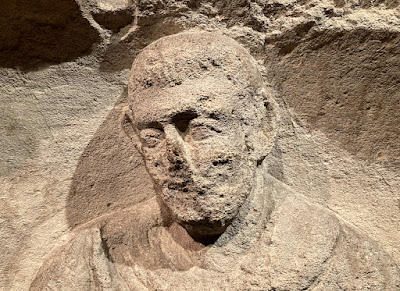

Constant change - Bath, UK

Monday, February 18, 2019

Constant Change, Awareness & Timeless Kindness

     “Whatever you are willing to be with, you go beyond. Sensory impressions and habit patterns that you neither resist nor get involved in expand & pop, dissolve, & disappear, like bubbles rising to the surface of a lake. All movements of sensation, thought, and emotion expand as they come to the surface of your awareness. As they expand, they may appear to be momentarily troublesome. But they are simply seeking the surface, and, when you don’t resist, they disintegrate into the spaciousness of awareness. Whatever is allowed to merely be, as it is, in awareness, resolves, dissolves, and disappears. This truth pertains to your every experience.” 
     Richard Miller. “Yoga Nidra. A Meditative Practice for Deep Relaxation and Healing.” Sounds True, 2005.

     So when we meditate, we don't engage with thoughts, words, images. We're aware of them, but we let them be, letting them take the natural course (constant change) of all phenomena: arising, persisting a while, & disintegrating.

     "When you sit,
     you leave the front door open,
     you leave the back door open,
     and you don't serve tea."                  Shunryu Suzuki

     Resting in awareness - as described above - feels surprisingly liberating. Experiencing this repeatedly is transformative.
     When instead of letting them be, we hook onto thoughts, emotions & moods, we prolong their otherwise naturally brief existence, bogging ourselves down in sickeningly-familiar swamps AND repeatedly failing to vibrantly live our one short, precious life. 

     We notice this, and with endless patience, kindness, gentleness & perseverance, we seamlessly let it be, and bring kind awareness back to just what the present moment holds, right here, right now.


Friday, February 1, 2019

Mood?

     Our mood* - the overall tone of our emotions - is something we typically assume to be like the weather, entirely dependent on external circumstances ie completely out of our hands. So we tend to do nothing about the one constant, major influence over how we perceive and respond to everything.
* "an emotional state. In contrast to emotions, feelings, or affects, moods are less specific, less intense and less likely to be provoked or instantiated by a particular stimulus or event. Moods are typically described as having either a positive or negative valence. In other words, people usually talk about being in a good mood or a bad mood." https://en.wikipedia.org/wiki/Mood_(psychology)

     "Einstein was asked what he thought the most important question was that a human being needed to answer. His reply was, ‘Is the universe a friendly place or not?’ 
     And indeed, our answer to that question is the cornerstone on which many of our values and beliefs inevitably rest. If we believe that the universe is unfriendly and that our very souls are in danger, peace will be elusive at best." 
     Joan Borysenko. “Fire in the Soul. A New Psychology of Spiritual Optimism.” Warner Books, 1993.

      If our mood is generally "bad" - and for many it is - it's likely due to a deep underlying conviction, conscious or unconscious, that the universe is unfriendly
. Such an assumption can ruin any sense of hope & optimism, so that only cynicism, depression or at best, a grim determination to survive remains. But does such misery make any sense? Is the universe really unfriendly??
     Scientists, as well as deeply self-reflective people would say that life operates according to impersonal natural laws. If you sit under an apple tree, and an apple falls & lands on your head, the universe is not out to get you. Similarly, all manner of interconnected causes & effects have continuously been in motion since the beginning of time, so everything is changing constantly in a very complex, yet "lawful" manner. Aging, sickness & death (existential facts) are part of this. If we decide that gravity, the weather, aging, death or any other natural phenomenon is personally offensive, then we're not only mistaken, but causing ourselves needless suffering, and would benefit from professional help. Like Dylan Thomas, "Do not go gentle into that good night, but rage, rage against the dying of the light" we may reflexively protest & rigidly cling to unrealistic preferences. BUT maturing wisely, becoming intimate with all of life, is a far, far better choice - AND WE DO HAVE A CHOICE.
     Given that the universe is at worse neutral, if not evolving in a positive direction, we might pay closer attention to our mood, and adjust it to mesh with reality. Cheers!


Tuesday, April 10, 2018

The Buddha's Teachings Concisely Summarized


"Physicists explore levels of matter; 
mystics explore levels of mind. 
What they have in common is that both levels 
lie beyond ordinary sense perception."                      Fritjof Capra


Sunday, December 11, 2016

Leaning Into Reality - All of It

     Fear of change is universal. At some level we all realize that everything is constantly changing, quickly, unpredictably and essentially uncontrollably. That is truly terrifying!
     Constant change (anicca), including aging, sickness & death, is so frightening that most of us simply can't face it, and thus suppress the whole idea, distracting ourselves with anything & everything: shopping, multitasking, compulsive texting, overeating, substance abuse, gambling, sex, workaholism, cults, ... 
     There are innumerable dysfunctional support groups for the many who cannot face existential realities. Why dysfunctional? Because trying to avoid reality doesn't work & only makes it harder when life hits you between the eyes to wake you up.

     “I’ve had to learn to lean into all I don’t understand, accepting that I am changed by what I hear. In all, it’s been an exciting journey, one that’s made me more alive.”
      Mark Nepo. “Seven Thousand Ways to Listen. Staying Close to What is Sacred.” Free Press, NY, 2012.

      Life "asks us to ('lean into') look at, listen to, develop curiosity towards, take responsibility for our own suffering. When we don’t, we blame others or external factors (project, externalize), and suffering becomes endless. Meditation is a way of really settling into the moment, and sustaining long, long stretches of awareness so we can know and understand ourselves, and see where delusions arise.”      Ajahn Viradhammo


Monday, April 13, 2015

Acceptance & Insight - Not One, Not Two


     "Do you wish to free yourself of mental and emotional knots
and become one with the Tao? If so, there are two paths available to you:
     The first is the path of acceptance. Affirm everyone and everything. Freely extend your goodwill and virtue in every direction, regardless of circumstances. Embrace all things as part of the Harmonious Oneness, and then you will begin to perceive it.
     The second path is that of denial. Recognize that everything you see and think is a falsehood, an illusion, a veil over the truth. Peel all the veils away, and you will arrive at the Oneness.
     Though the paths are entirely different, they will deliver you to the same place: Spontaneous awareness of the great Oneness. Once you arrive there, remember: it isn't necessary to struggle to maintain unity with it. All you have to do is participate in it."


Hua Hu Ching: The Unknown Teachings of Lao Tzu (Trans. Brian Walker)

http://WisdomAtWork.com 


luminokaya.com

Monday, March 30, 2015

Basis of Mental Illness & Suffering from a Buddhist Perspective


     These four are distortions of perception, thought & view:

               • Sensing no change in the changing, 
               • Sensing pleasure in suffering, 
               • Assuming "self" where there's no self, 
               • Sensing the un-lovely as lovely.

     Delusion is a mental illness that causes all sorts of suffering; mental health can be restored by correcting the flaws in how the mind operates.

       "Vipallasa Sutta: Distortions of the Mind" (AN 4.49), translated from the Pali by Andrew Olendzki. Access to Insight (Legacy Edition), 2 November 2013, http://www.accesstoinsight.org/tipitaka/an/an04/an04.049.olen.html .


ShopVac   www.dpreview.com

Monday, June 3, 2013

Anicca, Anatta, Dukkha

Transient joys
Transient neutral times
Transient sorrows
Ever-changing energies flowing through porousness
Flowing through
Flowing through


EMP building & Space Needle, Seattle, WA

Tuesday, February 26, 2013

Fantasy, Existential Attitude, and then ...

     "A sense of disorientation and confusion in the face of an apparently meaningless or absurd world" is an essential "reality check" in one's maturation to adulthood. Before we experience this 'existential attitude', we're living a fantasy, not fully aware of existential realities: constant change, aging, sickness and death.
     Thousands of years after the Buddha, Soren Kierkegaard also realized that "each individual — not society or religion — is solely responsible for giving meaning to life and living it passionately and sincerely ('authentically')."
Photo: Ipinheiro   www.dpreview.com

Sunday, December 2, 2012

Dukkha - AND YET - All Manner of Things Are Well ...

     Near the end of my professional career, I'd like to be taking it easier at work, sorting through my large collection of clinical cases and putting them into a suitable format to serve as teaching material, writing a few papers for publication - essentially summing up my career. Instead, I'm taking on more and more routine tasks. Part of the reason for this increased busyness is serious illness of some of my colleagues, forcing them to retire prematurely. So I'm "sharing the load".
     I feel fortunate being able to help, rather than having to retire early. Soon enough, I'll be the one who can no longer provide help. Then I hope to have enough humility & wisdom to accept help gracefully - something with which I, like most health-care professionals, have minimal experience or skill.
     This is a unique part of life, when one's fully aware of life's fragility, yet healthy enough - ever so briefly - to have agency

     "Once you feel in your bones and throughout your awareness the emptiness of your mind, you are at peace. Even when problems and difficulties arise, there's still the thread of peace woven in at the heart of them."      Norman Fisher 
       Shambhala Sun January 2013   http://www.shambhalasun.com/


Photo: RuthC   www.dpreview.com